

We live in a world where the change is the only constant and customers are in-charge. Innovations in technology are fundamentally changing the way we interact with the world around us and changing what citizens expect from the government. Incremental adaptation to technical change and disruption is no longer enough and federal organizations must take positive steps to keep pace with innovation and change. The federal government is often perceived as being behind the digital innovation curve, taking significantly longer to adopt web-based solutions than the private sector, with less enthusiasm and skill. But in recent years, several initiatives undertaken by federal, state, and local agencies are challenging that perception.Creating and optimizing digital services has become a top priority for governments in recent years. The factors driving this change are varied. Legislative mandates (such as the Office of Management and Budget (OMB) Circular 11 mandating incremental development), combined with evolving citizen expectations, changing technological, social, political and cultural landscapes are forcing federal agencies to consider broader digital transformation to become Agile, data-driven organizations. Customer experience (CX) focused digital transformation enables federal agencies to provide services that meet the evolving expectations of citizens and businesses, even in a period of tight budgets and complex challenges such as income inequality, geopolitical instability, and aging populations.

In a recent conversation about implementing Agile and DevOps in an organization, our group stumbled into the the question of “Common Platforms” – more specifically, “are common platforms (Tools, technologies, architectures, solutions) helpful or detrimental to a team’s agility in an Agile operating environment?”. There were plenty of opinions in the room — as seems to be the case these days with any discussion related to Agile and DevOps — and the general opinion of the group was that common platforms would constrain a team’s ability to innovate quickly and are fundamentally antithetic to the principles of Agile. On the surface, this position seems rather puristic in nature and seem to ignore the practical operational trade-offs an organization needs to make in order to meet many of its conflicting/competing priorities.
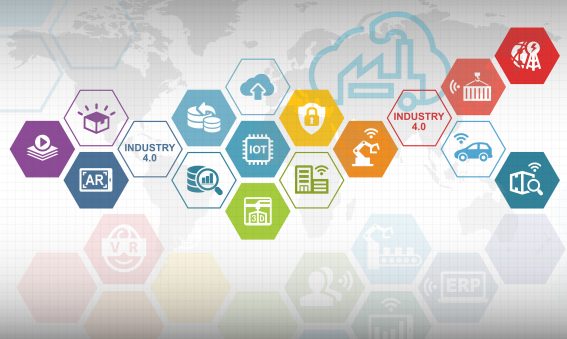
World is changing around us. Technological innovation driven by cloud, mobile, social, data and IoT is impacting the way we live, work and play. The pace of technological innovation has increased over the past few years and is accelerating fueled by the innovation created in the digital networks. Current rate of technology innovation is perhaps the most dramatic and disruptive since the industrial revolution. Technologies such as Cloud Computing, Mobility, Internet of Connected Things, Connected Homes and Cars, and Wearables are impacting the way consumers interact with the world around them and this in turn is impacting the very core business models of each business. Consumers in almost all industries are becoming increasing tech savvy and demanding digital solutions from businesses. No organization and business are immune to change any more as changing technologies and consumer behavior are demanding a change and fundamental transformation in how businesses operate in this new normal where change is the only constant.